Introduction to gold trading
Gold as an Investment
Before jumping on the gold bandwagon, let us first put a damper on the enthusiasm around gold and at the outset examine some reasons why investing in gold has some fundamental issues.
The main problem with gold is that, unlike other commodities such as oil or wheat, it does not get used up or consumed. Once gold is mined, it stays in the world. A barrel of oil, on the other hand, is turned into gas and other products that are expended in your car's gas tank or an airplane's jet engines. Grains are consumed in the food we and our animals eat. Gold, on the other hand, is turned into jewelry, used in art, stored in ingots locked away in vaults, and put to a variety of other uses. Regardless of gold's final destination, its chemical composition is such that the precious metal cannot be used up - it is permanent.
Investing in Gold
The easiest way to gain exposure to gold is through the stock market, via which you can invest in actual gold bullion or the shares of gold-mining companies. Investing in gold bullion won't offer the leverage you would get from investing in gold-mining stocks. As the price of gold goes up, miners' higher profit margins can boost earnings exponentially. Suppose a mining company has a profit margin of $200 when the price of gold is $1000. If the price rises 10%, to $1100 an ounce, the operating margin of the gold miners goes up to $300 – a 50% increase.
Of course, there are other issues to consider with gold-mining stocks, namely political risk (since many operate in third-world countries) and the difficulty of maintaining gold production levels.
The most common way to invest in physical gold is through the SPDR's Gold Shares (NYSE:GLD) ETF, which simply holds gold. When investing in ETFs, pay attention to net asset value (NAV), as the purchase can at times exceed NAV by a wide margin, especially when the markets are optimistic.
A list of gold-mining companies includes Barrick Gold (NYSE:ABX), Newmont Mining (NYSE:NEM), Goldcorp (NYSE:GG), and Anglogold Ashanti (NYSE:AU). Passive investors who want great exposure to the gold miners may consider the VanEck Vectors Gold Miners ETF (NYSE:GDX), which includes investments in all the major miners. (See also: Top 5 Gold ETFs for 2017)
Gold Bullion
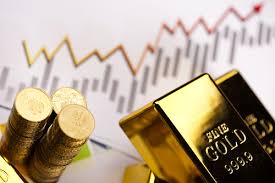
This is perhaps the best-known form of direct gold ownership. Many people think of gold bullion as the large gold bars held at Fort Knox. Actually, gold bullion is any form of pure, or nearly pure, gold that has been certified for its weight and purity. This includes coins, bars, etc., of any size. A serial number is commonly attached to gold bars as well, for security purposes.1
While heavy gold bars are an impressive sight, their large size (up to 400 troy ounces) makes them illiquid, and therefore costly to buy and sell.2 After all, if you own one large gold bar worth $100,000 as your entire holding in gold, and then decide to sell 10%, you can't exactly saw off the end of the bar and sell it. On the other hand, bullion held in smaller-sized bars and coins provides much more liquidity and is quite common among gold owners.
Gold Coins
For decades, large quantities of gold coins have been issued by sovereign governments around the world. Coins are commonly bought by investors from private dealers at a premium of about 1% to 5% above their underlying gold value, but it jumped to 10% in March 2020.
Gold ETFs and Mutual Funds
One alternative to a direct purchase of gold bullion is to invest in one of the gold-based exchange-traded funds (ETFs). Each share of these specialized instruments represents a fixed amount of gold, such as one-tenth of an ounce. These funds may be purchased or sold just like stocks, in any brokerage or IRA account. This method is, therefore, easier and more cost-effective than owning bars or coins directly, especially for small investors, as the minimum investment is only the price of a single share of the ETF. The annual average expense ratios of these funds are often around 0.65%, much less than the fees and expenses on many other investments, including most mutual funds.4
Many mutual funds own gold bullion and gold companies as part of their normal portfolios, but investors should be aware that only a few mutual funds focus solely on gold investing; most own a number of other commodities. The major advantages of the gold-only mutual funds are:
- Low cost and low minimum investment required
- Diversification among different companies
- Ease of ownership in a brokerage account or an IRA
- No individual company research needed
Day trading ETFs

Gold exchange-traded funds (ETFs) are one of the simplest ways to trade gold. There are gold ETFs with lots of liquidity, and, unlike futures, the ETFs don't expire. Gold ETFs also offer diversity: trade the price of gold, or trade an ETF related to gold producers. Gold, like other assets, moves in long-term trends. Those trends attract large numbers of traders at certain junctures, providing the most favorable day-trading conditions. Here's how to take advantage of this.
When to Day-Trade Gold Trusts and ETFs
Volatility is a day-trader's friend. Frequent price movement, coupled with liquidity, creates greater potential for profits (and losses) in a short time.
Focus on gold ETFs and trusts when the day-to-day price is fluctuating at least 2%. Apply a 14-day average true range (ATR) indicator to a gold daily chart, then divide the current ATR value by the ETF's or trust's current price, and multiply the result by 100. If the number isn't above 2, then the market is not ideal for day-trading gold ETFs or trusts.
Oil trading

Crude Oil trading offers excellent opportunities to profit in nearly all market conditions due to its unique standing within the world’s economic and political systems. Also, energy sector volatility has risen sharply in recent years, ensuring strong trends that can produce consistent returns for short-term swing trades and long-term timing strategies.
Market participants often fail to take full advantage of crude oil fluctuations, either because they haven't learned the unique characteristics of these markets or because they're unaware of the hidden pitfalls that can eat into earnings. In addition, not all energy-focused financial instruments are created equally, with a subset of these securities more likely to produce positive results.
1. Learn What Moves Crude Oil
Crude oil moves through perceptions of supply and demand, affected by worldwide output as well as global economic prosperity. Oversupply and shrinking demand encourage traders to sell crude oil markets, while rising demand and declining or flat production encourages traders to bid crude oil higher.
Understand the Crowd
Professional traders and hedgers dominate the energy futures markets, with industry players taking positions to offset physical exposure while hedge funds speculate on long- and short-term direction. Retail traders and investors exert less influence here than in more emotional markets, like precious metals or high beta growth stocks.